
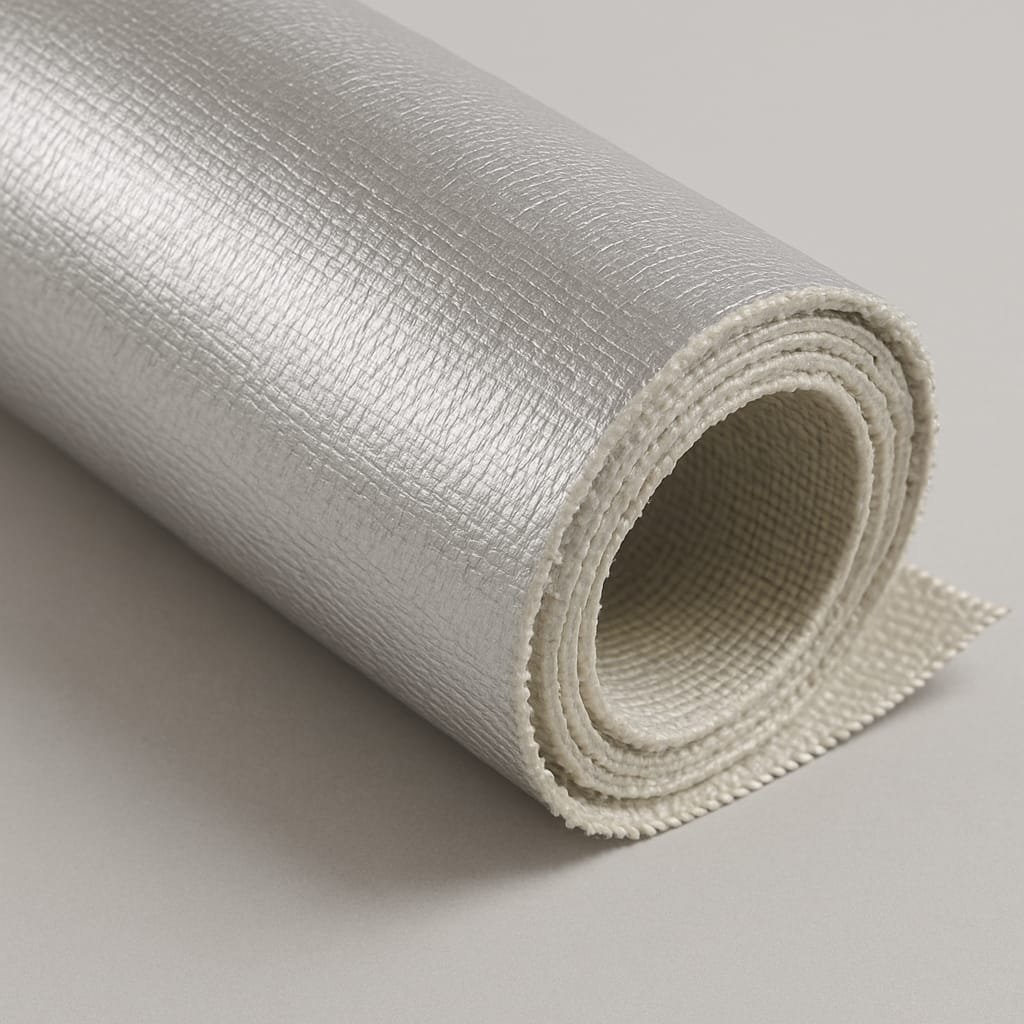
Aluminium Coated Fiberglass Fabric
Aluminum coated fiberglass cloth uses a unique advanced composite technology with glass fiber fabric,Use of special flame retardant adhesive to form a dense composite film aluminium foil with the charasteristics of smooth surface,High light reflectivity,A large longitudinal and transverse tensile,Air-tightness,Waterproofing,Good sealing performance and durability.Aluminium coated fiber glass cloth is mainly used for oil pipes,Steam pipes and other chemical protective equipment.It can achieve anti-corrosion,Flame retardance and is a very good heat insulator.
- Aluminium-foil face reflects radiant heat — a true heat barrier
- Air-tight, waterproof & flame-retardant
- Anti-corrosion protection for oil, steam & chemical pipework
- Strong glass base — high tensile strength & durability
Overview
Aluminium coated fiberglass fabric is a woven glass cloth laminated to an aluminium foil face using a special flame-retardant adhesive, forming a dense composite film. It is a different tool from the PTFE- and silicone-coated fabrics: where those are non-stick release and flexing fabrics, this one is a reflective heat and weather barrier. The aluminium face reflects radiant heat and light, while the glass base provides the strength and the thermal insulation.
That reflective foil face is what makes it effective. A large part of the heat coming off a hot pipe or vessel is radiant, and a bright aluminium surface reflects that radiation back rather than absorbing it — so the fabric works as an insulating jacket that keeps heat in (or radiant heat out). The composite is deliberately air-tight and waterproof, with good sealing performance, so it also protects the lagging and the pipe underneath from moisture ingress and weather.
The construction gives it a useful all-round spec: a smooth surface with high light and heat reflectivity, high tensile strength in both directions, air-tightness, waterproofing, and good durability. It is flame-retardant by design, and it provides anti-corrosion protection to the equipment it wraps — a real benefit on outdoor and chemically exposed pipework.
It is used mainly to jacket and protect oil pipes, steam pipes and other chemical process and protective equipment — combining heat insulation, anti-corrosion protection and flame retardance in one wrap. Tell us the pipe or vessel size and the service temperature and we will recommend the right grade and width.
Specifications
Typical properties of aluminium-foil-faced glass fabric. Confirm temperature grade against the pipe/vessel service.
| Property | Value | Test Standard |
|---|---|---|
| Construction | Woven glass fabric + aluminium foil, flame-retardant adhesive | — |
| Surface | Smooth, highly reflective aluminium face | — |
| Heat / Light Reflectivity | High — reflects radiant heat | — |
| Tensile Strength | High (longitudinal & transverse) | — |
| Air-Tightness | Air-tight | — |
| Water Resistance | Waterproof | — |
| Fire Behaviour | Flame-retardant | — |
| Corrosion Protection | Anti-corrosion jacket for pipework | — |
| Primary Use | Insulating & protecting oil / steam / chemical pipes | — |
| Supply | Rolls, range of widths | To order |
Applications
A reflective insulating and protective jacket for hot and exposed pipework.
Downloads
Frequently Asked Questions
How is this different from PTFE- or silicone-coated glass fabric?
Why does the aluminium face matter?
Much of the heat from a hot pipe is radiant, and a bright aluminium surface reflects that radiation rather than absorbing it. So the foil face makes the fabric far more effective as a heat barrier — keeping heat in on a hot line, or reflecting radiant heat away from a surface.
Is it waterproof and suitable for outdoor use?
Yes — the composite is air-tight and waterproof, so it protects the lagging and the pipe from moisture and weather, and it provides anti-corrosion protection. That makes it well suited to outdoor and exposed pipework.
Is it fire-resistant?
It is flame-retardant by design, using a flame-retardant adhesive and a non-combustible glass base with a metal face — which is why it is used as a protective jacket on hot and hazardous equipment.
What is it mainly used for?
Jacketing and protecting oil pipes, steam pipes and chemical process equipment — combining heat insulation, radiant-heat reflection, waterproofing, flame retardance and anti-corrosion protection in a single wrap.
What sizes are available?
It is supplied in rolls in a range of widths. Tell us the pipe or vessel dimensions and the service temperature and we will recommend the width and temperature grade.
Need a quote or a spec check?
Send us your operating conditions and we will confirm the right grade for the job.
Not sure this is the right material?
Launch the Solution Finder