
July 7, 2026
Extending Spinning Frame & Loom Life: Rubber, Felt and Sealing Components for Textile Mills
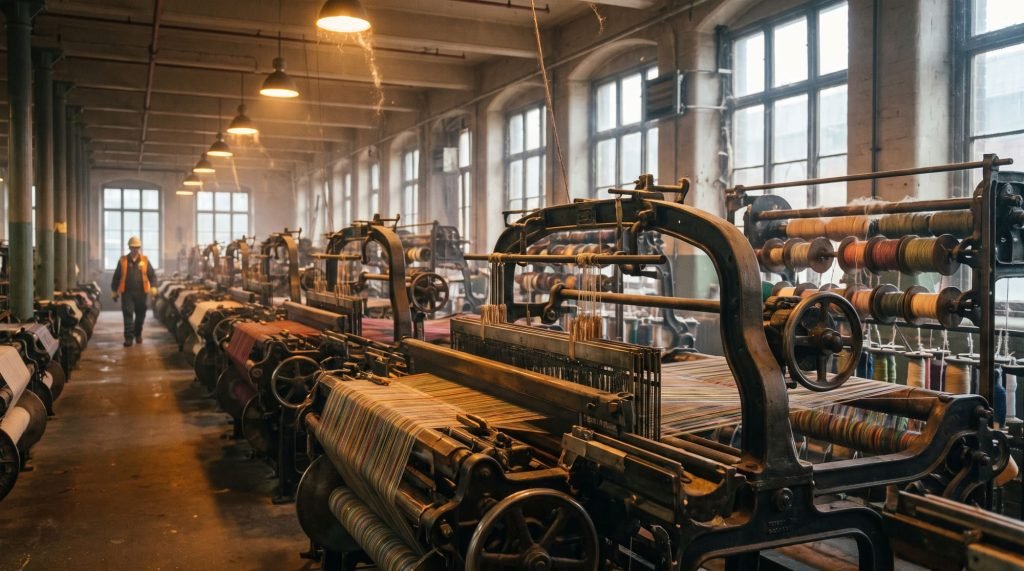
Textile mills live and die on consistency — a spinning frame that drafts fibre unevenly, or a dyeing line that runs a few degrees off spec, shows up directly in fabric quality. Several of the components involved are small and easy to overlook until output quality drifts.
Spinning frame roller grip
Consistent fibre draft depends on the roller and apron surfaces gripping fibre the same way, roll after roll, for the life of the component. Rubber Emery Fillet is purpose-built for this — a resilient rubber base bonded to a durable emery surface, made to your roller and apron dimensions, giving the consistent grip that even fibre draft depends on. When these wear unevenly, the first symptom is usually yarn count variation, not an obvious mechanical fault.
Oil wicking and cushioning
Spinning and weaving machinery still relies on felt for oil wicking, cushioning and vibration damping in dozens of small points throughout the line. Wool Felt is naturally absorbent and remains the standard for lubrication wicks, while Polyester Felt offers a rot-proof, moisture-resistant alternative for damper environments — both cut easily into the strips, rings and washers these applications need.
Pump and valve seals across the mill
General utility pumps — dye liquor circulation, water transfer, sizing — run at moderate temperature and mild chemical exposure rather than the extremes seen in chemical plants. Acrylic PTFE Packing is a cost-effective, clean-sealing option for this general duty, while Asbestos Teflon Packing covers slightly hotter or more chemically active lines at a similarly moderate cost.
Dyeing and finishing: heat, gauges and non-stick surfaces
Dye and finishing lines run hot process baths and drying stages where level indication and non-stick surfaces both matter. Borosilicate Glass Tube provides level and sight indication that tolerates the thermal shock of dye-bath temperature swings without cracking. On finishing and drying lines, PTFE Coated Fiberglass Fabric gives a non-stick, heat-resistant surface for heat-sealing and release applications, and PTFE Mesh Conveyor Belt is built specifically for drying and curing ovens, where its open mesh allows airflow through the belt while the PTFE coating keeps fabric from sticking.
A practical maintenance sequence
- Check roller and apron emery fillet grip during scheduled spinning-frame servicing, not only when yarn quality complaints start.
- Replace oil-wick felt on a fixed interval rather than waiting for visible dryness — by the time it’s visibly dry, bearing wear has usually already started.
- Inspect dye-bath sight glasses for thermal-shock cracking after any rapid temperature change in the process.
- Confirm mesh conveyor belts still release fabric cleanly — a belt that has lost its release surface will show up as fabric marking before it shows up as a mechanical fault.
Frequently asked questions
Our yarn count keeps drifting slightly — could roller fillets really be the cause? It’s one of the most common and most overlooked causes; uneven grip from worn emery fillets changes draft consistency well before it becomes an obvious mechanical symptom.
Is polyester felt a drop-in replacement for wool felt? For most cushioning and sealing duty, yes — wool felt’s advantage is specifically oil absorbency for wicking applications.
Can PTFE mesh belts be repaired, or do they need full replacement? Small damage can sometimes be patched, but once the coating has worn through in the working area, replacement is usually more reliable than a repair.
Send us your roller and apron dimensions and we’ll cut emery fillets to match — no need to send a full sample if you already have the measurements on file.