
July 8, 2026
How to Fit Ceramic Fiber Board and Rigid Insulation Panels
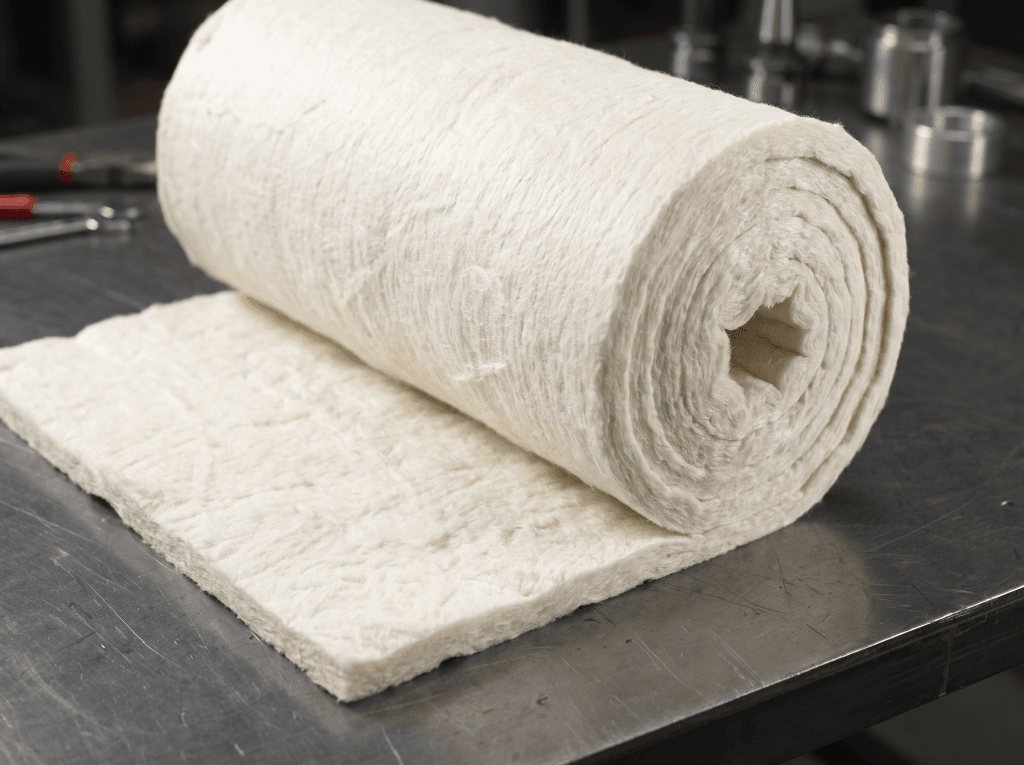
Ceramic fibre board is rigid and self-supporting, unlike flexible blanket — which means it needs a different installation approach, particularly around fixing points and joints, to avoid cracking under thermal cycling.
Step 1: Plan joint locations away from stress points
Position Ceramic Board panel joints away from corners, burner ports and other high-stress or high-movement points where thermal expansion is greatest — a joint at a stress point is far more likely to open up or crack over repeated heating cycles.
Step 2: Allow for thermal expansion at every joint
Leave a small expansion gap between panels (typically a few millimetres, per the manufacturer’s guidance for panel size and operating temperature) rather than fitting panels tight edge-to-edge — panels fitted without expansion allowance crack as they push against each other during heat-up.
Step 3: Fix with compatible anchors, not rigid bolts alone
Use ceramic or high-temperature metal anchors designed to allow slight panel movement, rather than rigidly bolting the board flat — a rigidly fixed board has nowhere to go during thermal expansion and cracks at the fixing point.
Step 4: Fill gaps and penetrations with ceramic paper
Use Ceramic Paper to fill the expansion gaps and any irregular penetrations — it compresses to fill the gap while still providing insulating value, unlike a rigid filler that would defeat the purpose of the expansion gap.
Step 5: Support panel weight adequately during and after fitting
Ceramic board is denser than blanket — confirm the mounting structure and anchors are rated for the panel weight, especially on vertical or overhead installations, rather than assuming blanket-rated fixings are sufficient.
Frequently asked questions
Can ceramic board be cut on site, or does it need factory cutting? It can be cut on site with standard tools designed for refractory board — take the same dust precautions as with blanket.
Why did our ceramic board crack after a few heating cycles? The most common cause is insufficient expansion gap between panels or at fixing points — panels fitted tight with no room to expand will crack under repeated thermal cycling.
Tell us your furnace zone and panel size and we’ll confirm the right joint spacing and anchoring approach.