
July 8, 2026
Ceramic Fiber vs Glass Wool vs Rock Wool: Insulation Material Comparison
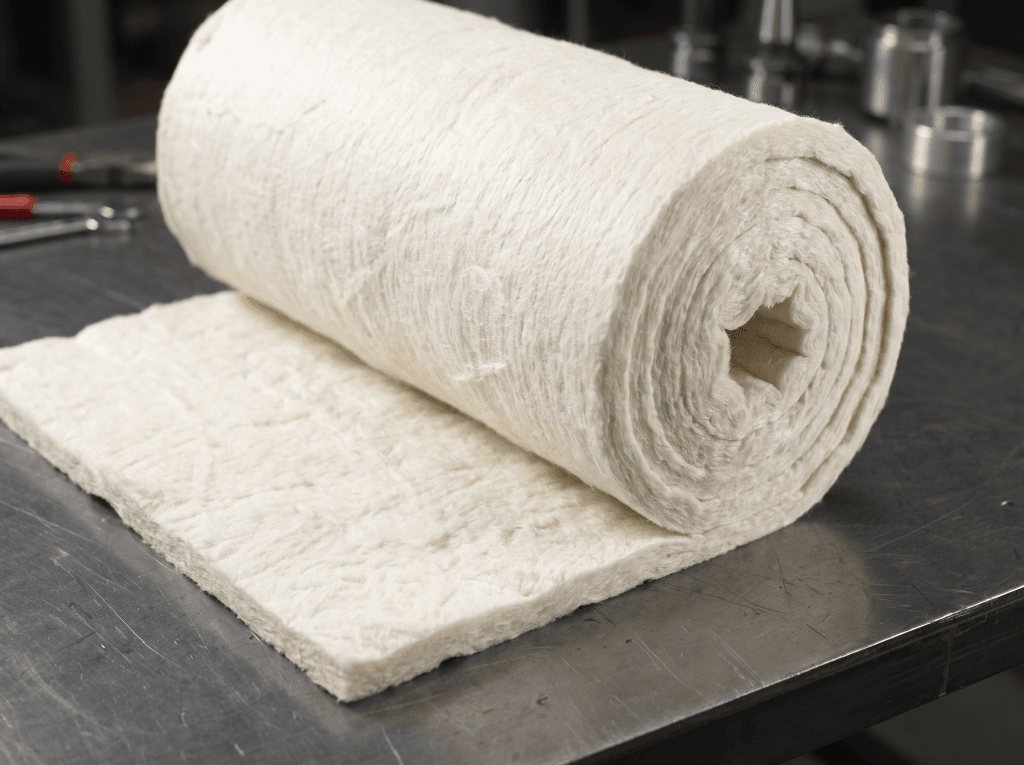
Ceramic fibre, glass wool and rock (mineral) wool all insulate, but their temperature ceilings differ enormously — using an expensive high-temperature material where a cheaper one would do wastes money, while under-specifying leads to insulation failure and fuel loss.
Temperature ceiling: the primary selection factor
Ceramic Fiber Wool is classified up to 1260°C and can remain stable in short-term exposure well beyond that. Rock wool is generally limited to around 600°C. Glass Wool covers roughly -195°C to +250°C for standard grades, with specialist high-binder grades reaching higher.
Where ceramic fibre is worth the extra cost
Furnace, kiln and boiler linings running above 600°C need ceramic fibre — rock wool and glass wool simply aren’t rated for that range regardless of thickness. Ceramic Board and Ceramic Paper extend the same temperature range into rigid and thin-flexible forms respectively.
Where glass wool is the more sensible choice
For general building, duct and pipe insulation below 250°C — the overwhelming majority of HVAC, general plant and cold-storage insulation — glass wool provides equivalent thermal and acoustic performance at meaningfully lower cost than ceramic fibre.
A quick decision table
| Application temperature | Recommended material |
|---|---|
| Below 250°C (HVAC, general plant, cold storage) | Glass Wool |
| 250–600°C | Higher-grade glass wool or entry ceramic fibre grades — confirm with us |
| Above 600°C (furnaces, kilns, boilers) | Ceramic Fiber Wool / Board / Paper |
Frequently asked questions
Is ceramic fibre simply “better” than glass wool since it handles more heat? Not for low-temperature applications — its cost isn’t justified below the range where glass wool already performs perfectly well.
Does rock wool have any advantage over the two we supply? Rock wool’s main advantage is cost at its mid-range temperature ceiling; for most of our customers’ needs, either glass wool (lower temperature) or ceramic fibre (higher temperature) covers the actual requirement more precisely.
Tell us your operating temperature and we’ll confirm the most cost-effective insulation grade for it — no need to over-specify.