
July 8, 2026
Compressed Non-Asbestos vs Asbestos Jointing Sheet: What’s the Real Difference?
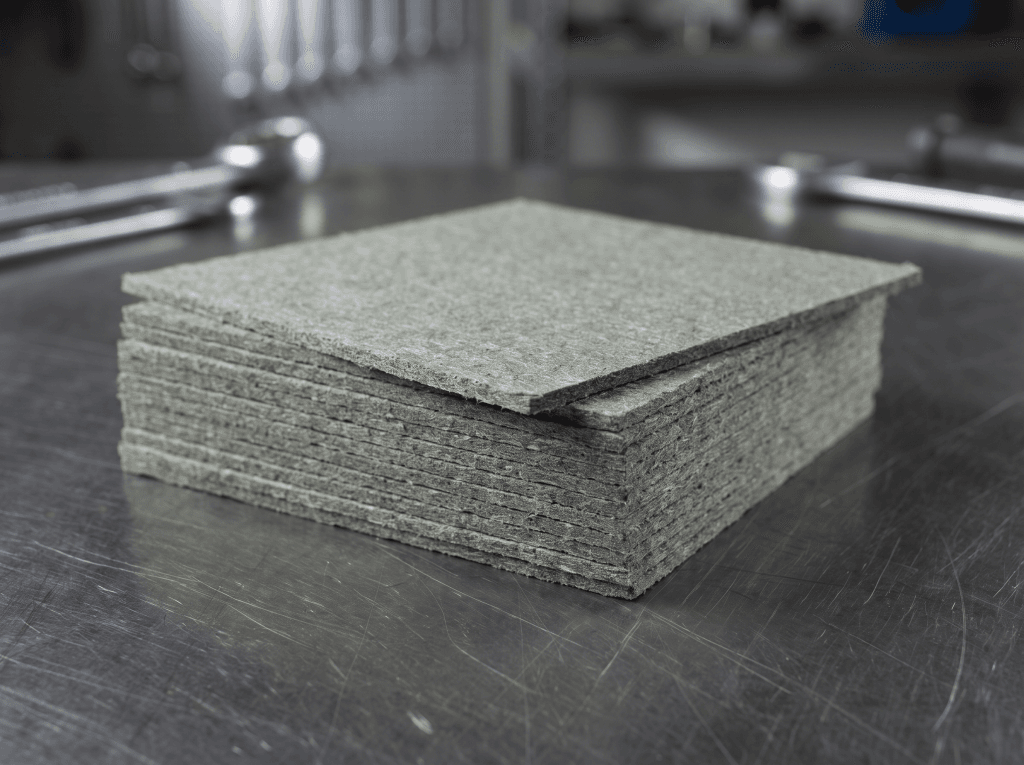
Non-asbestos and asbestos jointing sheet are often discussed as if the choice were purely regulatory, but there is a genuine performance difference at the temperature extremes — understanding where that gap actually matters (and where it doesn’t) helps you specify correctly rather than defaulting to the more expensive option out of caution.
Where the two are functionally equivalent
For standard steam, hot-oil and general flange duty up to around 200–210°C and 20 bar, Non-Asbestos Jointing Sheet performs equivalently to asbestos-based sheet — this covers the majority of flange gasketing in a typical plant.
Where asbestos jointing still has a real edge
Asbestos Jointing Sheet extends to roughly 450–500°C and handles higher pressure classes (up to around 100 bar depending on grade) — genuinely beyond what standard non-asbestos grades reliably cover. For the highest-temperature steam and process lines in a plant, this is a real, not just regulatory, difference.
High-temperature non-asbestos grades close some of the gap
Specialised high-temperature non-asbestos formulations exist that extend toward 450°C, narrowing the gap for plants that need to avoid asbestos entirely — but these are a distinct grade from standard non-asbestos jointing sheet, not a drop-in equivalent.
A quick decision table
| Line condition | Recommended sheet |
|---|---|
| Standard steam/oil, up to ~210°C, 20 bar | Non-Asbestos Jointing Sheet |
| Highest-temperature steam, up to ~450–500°C | Asbestos Jointing Sheet or HT non-asbestos grade |
Frequently asked questions
Is non-asbestos jointing sheet always the “safer” default choice? For most standard duty, yes, both for handling and regulatory reasons — reserve asbestos-based sheet specifically for lines where the higher temperature/pressure genuinely requires it.
How do I know if my line actually needs the higher-temperature grade? Check the line’s actual maximum operating temperature and pressure against the ~210°C/20 bar threshold — many lines assumed to need the higher grade are actually within standard non-asbestos range.
Send us your line’s actual temperature and pressure and we’ll confirm which grade you genuinely need — often it’s the more economical one.