
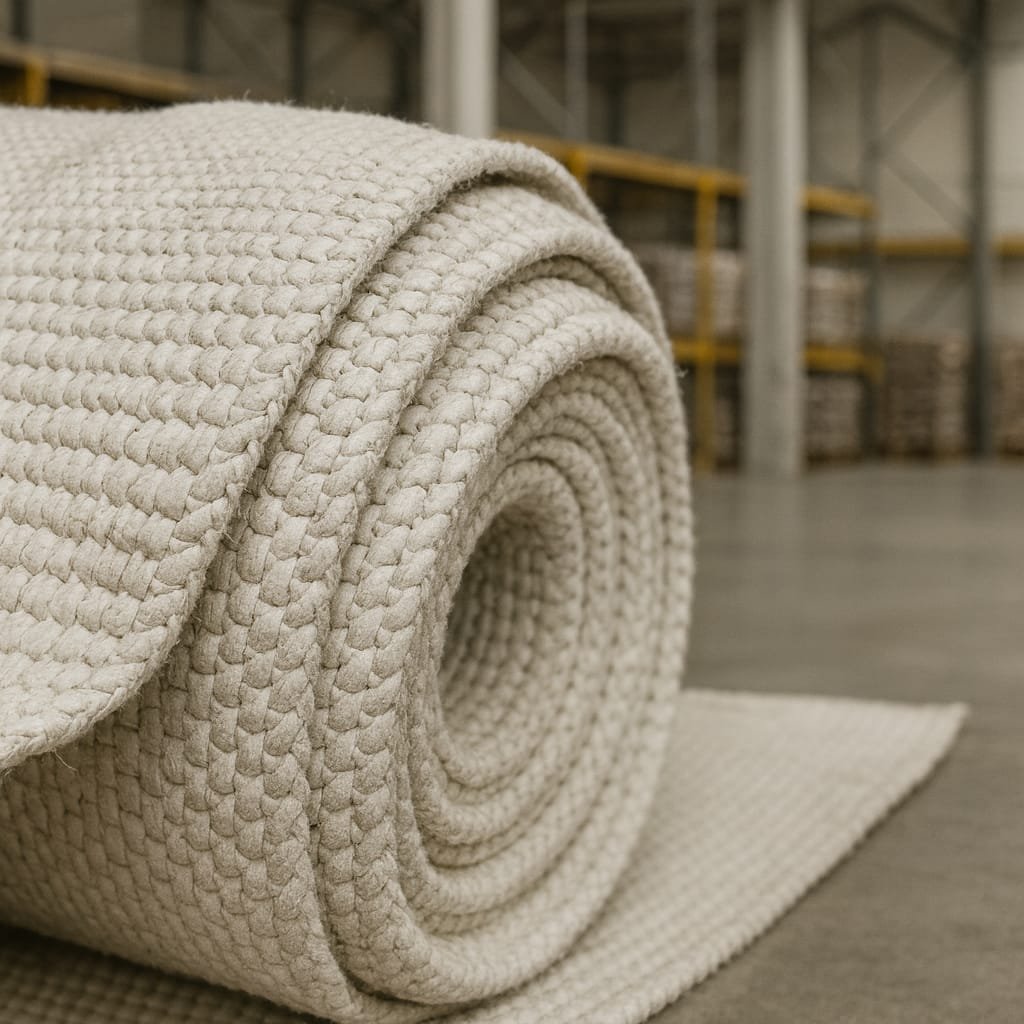
Asbestos Cloth
Interwoven from asbestos warp and weft yarns,It is suitable for lagging of boilers and pipe lines and also used as thermal insulating materials for factories,Building,Power stations and steamers.Also ideal for making protective gloves,Working clothes and gasket materials at temperatures up to 550 centigrade.Loss on ignition is 32% max.It is available in 1000 mm width and the thickness available is 1.5mm-3mm.
- Woven asbestos cloth — heat resistant to ~550°C
- For lagging boilers & pipelines and thermal insulation
- Also used for heat gaskets and protective textiles
- Ask about asbestos-free glass cloth for new work
Overview
Asbestos cloth is a woven textile made by interweaving asbestos warp and weft yarns into a flexible heat-resistant fabric. Historically it was the standard cloth for high-temperature lagging and protection: it withstands temperatures up to around 550°C, with a loss on ignition of about 32% maximum, and it is flexible enough to wrap pipes and vessels and to be cut and sewn into protective items.
Its traditional uses are thermal: lagging boilers and pipelines, and general thermal insulation in factories, buildings, power stations and steamer/marine plant. The same cloth is cut into heat-resistant gaskets and made up into protective gloves and working clothing for hot-work environments. It is supplied in a standard 1000 mm width, in thicknesses from about 1.5 mm to 3 mm.
It is essential to be clear about the material: this is an asbestos product. Asbestos fibres are a recognised health hazard when the cloth is cut, worn, frayed or otherwise disturbed and fibres are released. It must be handled with proper precautions — avoid creating dust, use appropriate protection, and follow local regulations for use and disposal. In most countries asbestos textiles are now heavily restricted or prohibited for new work for this reason.
For essentially all new insulation and protection work we recommend asbestos-free glass cloth, which actually handles a comparable-to-higher temperature (around 450–550°C) with none of the health burden. We continue to supply asbestos cloth only where an existing legacy specification specifically requires it — tell us the duty and we will advise the right, compliant material.
Specifications
Typical properties of woven asbestos cloth. For new work, compare against asbestos-free glass cloth.
| Property | Value | Test Standard |
|---|---|---|
| Material | Woven asbestos yarn (warp & weft) | — |
| Max Temperature | up to ~550°C | — |
| Loss on Ignition | ~32% max | — |
| Width | 1000 mm (standard) | — |
| Thickness | 1.5 mm – 3 mm | — |
| Uses | Lagging, insulation, gaskets, protective textiles | — |
| Health Status | Asbestos-containing — handle with precautions | See FAQs |
| Recommended Alternative | Asbestos-free glass cloth | — |
Applications
Traditional high-temperature cloth — with asbestos-free glass cloth recommended for new work.
Downloads
Frequently Asked Questions
Should I use asbestos cloth or glass cloth?
For new work, use asbestos-free glass cloth — it handles a comparable or higher temperature (around 450–550°C) with none of the health and disposal burden. We supply asbestos cloth only where a legacy specification specifically requires it.
Is asbestos cloth dangerous?
Asbestos fibres are a recognised health hazard when the cloth is cut, worn, frayed or disturbed and fibres are released. It must be handled with proper precautions — no dust generation, appropriate protection, and disposal per local regulations. Many countries now restrict or prohibit it for new work.
What temperature does it withstand?
Up to around 550°C, with a loss on ignition of about 32% maximum. Asbestos-free glass cloth reaches a similar range, which is why it is the recommended replacement.
What sizes does it come in?
A standard 1000 mm width, in thicknesses from about 1.5 mm to 3 mm. Thicker cloth gives more insulation; thinner cloth is more flexible for wrapping and sewing.
Can it be cut into gaskets?
Yes — it is used for heat-resistant gaskets, but for new gasket work we would point you to non-asbestos jointing materials for the same reasons of safety and compliance.
Why is asbestos still supplied at all?
Only to serve existing legacy installations and specifications that specifically call for it. For everything else, the asbestos-free equivalents match the performance without the hazard.
Need a quote or a spec check?
Send us your operating conditions and we will confirm the right grade for the job.
Not sure this is the right material?
Launch the Solution Finder