
Request a Quote
Heat Proof Cloth

Ceramic Fiber Cloth

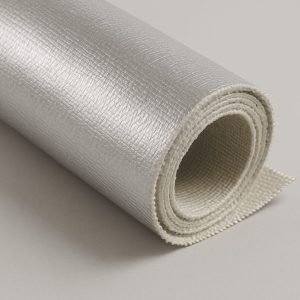
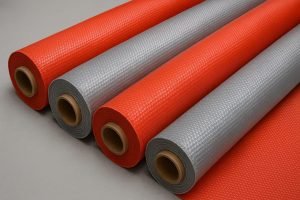
Woven ceramic fibre cloth for heat shielding, expansion joints and covers well above the range where glass cloth gives up.

  • Woven ceramic fibre — far higher temperature than glass cloth
  • Flexes with thermal movement at expansion joints without cracking
  • Non-combustible
  • Used for expansion joints, heat shields, curtains and covers
  • Available in a range of thicknesses and widths

Overview

Description

Ceramic fiber cloth is woven from ceramic fibre yarn, giving a flexible heat-resistant fabric that operates far above the ceiling of ordinary glass cloth (~550°C). Where a flexible fabric has to survive genuinely furnace-adjacent temperatures, this is the material.

Its most common industrial use is in expansion joints around furnaces and hot ducting. An expansion joint is the one place a lining is deliberately discontinuous — it has to accommodate thermal movement while still insulating — so the fabric bridging it does the hardest job in the installation. Ceramic fibre cloth flexes with that movement rather than cracking under it, and it holds up at the temperature.

It is also used for high-temperature curtains, removable covers, heat shields and gasket/seal fabrication. We supplied it to Mughal Steel for high-temperature expansion joints near their furnaces.
Specifications

MaterialWoven ceramic fibre yarn
Classification Temperature1260°C
Continuous Use TemperatureApprox. 1000–1100°C (see note)
CombustibilityNon-combustible
FormWoven cloth / fabric roll
ThicknessApprox. 2 mm – 6 mm (grade-dependent)
WidthApprox. 1 m (standard); other widths to order
vs Glass ClothFar higher (glass cloth: ~550°C)
Attacked ByHydrofluoric acid, phosphoric acid, strong alkalis

Applications

Furnace expansion joints
High-temperature heat shields & curtains
Removable covers for hot equipment
High-temperature gasket & seal fabrication
Protecting cables & equipment from radiant heat

Industries Served

Commonly specified across:

Steel Plants Foundries Cement Plants Glass Industry Power Plants

Frequently Asked Questions

What is the difference between ceramic fibre cloth and glass cloth?

Temperature, and it is a large difference. Glass cloth handles around 550°C. Ceramic fibre cloth operates far above that — into the range where only ceramic fibre products survive. If your duty is under 550°C, glass cloth is cheaper and perfectly adequate.

What temperature can it handle?

It is classified to 1260°C, but as with all ceramic fibre products the classification temperature is not the continuous-use temperature. Realistic continuous service is around 1000–1100°C. Tell us your actual continuous operating temperature.

Why is it used for expansion joints?

Because an expansion joint has to insulate AND flex. It is the one place a furnace lining is deliberately discontinuous, so the fabric bridging it has to accommodate thermal movement without cracking, at full furnace-adjacent temperature. Ceramic fibre cloth does both.

Can I use it for molten metal splash?

No. Temperature rating and splash rating are different requirements. For direct molten metal contact you need vermiculite coated silica cloth, which is specifically rated for splash.

Which chemicals attack it?

Hydrofluoric acid, phosphoric acid and strong alkalis — the same weaknesses as all ceramic fibre products. It resists most other media well.

Is it safe to handle?

It requires precautions. Cutting or disturbing ceramic fibre releases airborne fibre, and after service it can contain crystalline silica. Use gloves, eye protection and a proper dust mask — especially when removing used material.

Need a quote or a spec check?

Send us your operating conditions and we'll help you source the right Ceramic Fiber Cloth for the job.

Not sure this is the right material?

Launch the Solution Finder
Get a quote in minutes