
July 8, 2026
How to Torque and Install Compressed Jointing Sheet Gaskets Correctly
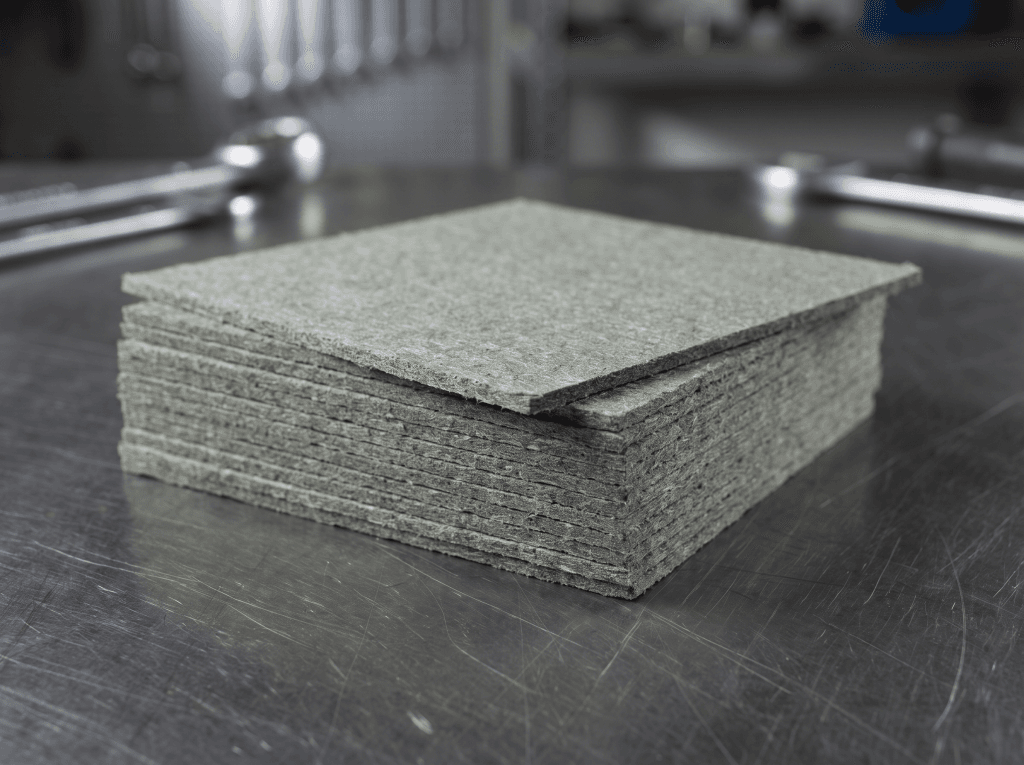
A correctly specified jointing sheet gasket still leaks if it is installed with the wrong bolt sequence. Tightening bolts in a simple circular or clockwise order — rather than a star pattern — pinches the flange unevenly and can crush or fail to properly seat the gasket, regardless of how good the material is.
Step 1: Inspect and clean the flange faces
Confirm both flange faces are clean, undamaged and free of old gasket material before fitting a new Non-Asbestos Jointing Sheet or Asbestos Jointing Sheet cut gasket — a scored or debris-covered face will leak regardless of gasket quality.
Step 2: Use the correct gasket for the pressure-temperature rating
Confirm the sheet grade matches the line’s actual duty — standard non-asbestos jointing suits steam and hot-oil to around 200–210°C and 20 bar; higher-temperature asbestos jointing extends to roughly 450–500°C. Installing the correct grade with the wrong bolt technique still fails.
Step 3: Tighten in a star (criss-cross) pattern, in stages
Never tighten bolts sequentially around the flange. Instead, work in a star pattern — tightening bolts across from each other, not next to each other — in three stages: roughly 30% of final torque, then 60%, then 100%. This distributes compressive load evenly and keeps the flange faces parallel throughout.
Step 4: Check torque values against the flange class
Bolt torque values differ by flange pressure class and bolt size — refer to the correct torque table for your flange rating rather than using a single “standard” torque across all joints.
Step 5: Re-check after initial pressurisation
Gaskets can relax slightly once the line is pressurised and heated for the first time — a follow-up torque check (using the same star pattern) after initial start-up catches this before it becomes a leak.
Frequently asked questions
Why does a circular tightening sequence cause leaks? It pinches the flange together on one side while it is still gapped on the other, crushing the gasket unevenly rather than compressing it uniformly.
Do all flange sizes need the same number of tightening stages? Larger flanges with more bolts typically benefit from the same three-stage approach, just applied methodically across more bolts in the star pattern.
If a flange keeps leaking after a gasket replacement, check the tightening sequence before assuming the gasket grade is wrong.