
July 8, 2026
Protecting Workers and Equipment from Molten Metal Splash in Foundries
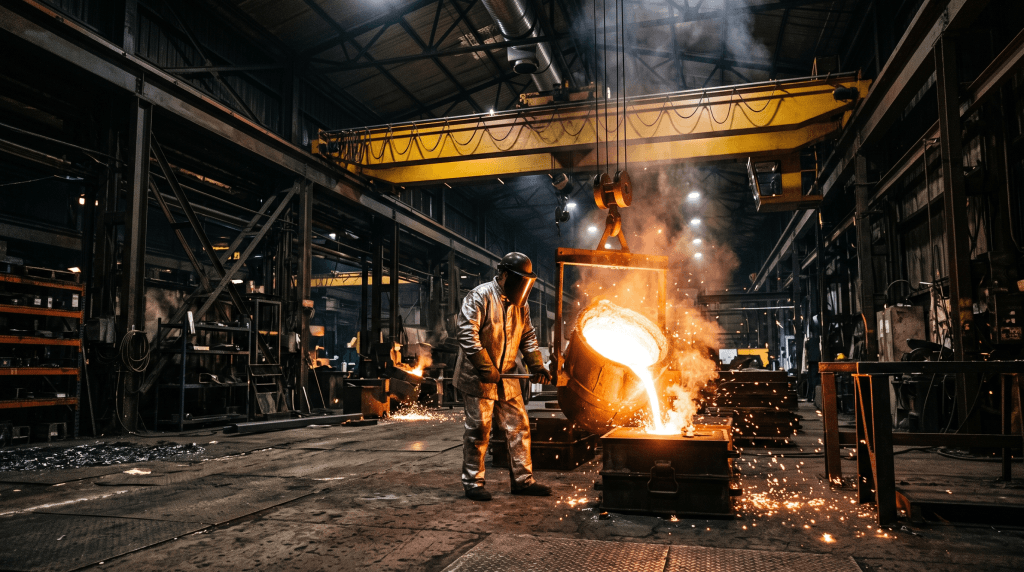
Molten metal splash is one of the few industrial hazards with dedicated international standards behind it — ISO 11612 rates fabric splash performance, tested to ISO 9185, while ASTM F1002 sets minimum requirements for materials protecting against molten iron, steel and aluminium. Choosing fabric based on temperature rating alone, without checking splash performance, is a common and dangerous shortcut.
Heat screens and splash barriers
Vermiculite Coated Silica Cloth is specifically built for this environment — its vermiculite coating over high-silica fabric resists molten splash and abrasion at continuous temperatures around 1000°C, well beyond what plain fibreglass cloth can take.
General heat shielding and furnace covers
Away from direct splash risk, Glass Cloth and Asbestos Cloth (or its non-asbestos equivalent) cover general heat shielding, furnace door curtains and removable covers up to around 450–550°C.
Furnace and ladle lining
Ceramic Fiber Wool and Ceramic Board line induction furnaces, ladles and holding furnaces at the 1260°C+ range foundries routinely operate at.
A standards-aware checklist
- Confirm splash-rated fabric (tested to ISO 9185 or ASTM F1002) is used anywhere direct molten splash is possible — not just heat-resistant fabric.
- Reserve vermiculite-coated cloth for the highest-risk zones; standard fibreglass is sufficient (and cheaper) everywhere else.
- Inspect furnace and ladle lining condition at every relining opportunity, not just on failure.
Frequently asked questions
Is fibreglass cloth splash-rated on its own? Generally no for direct molten contact — that is exactly the gap vermiculite-coated silica cloth is designed to close.
What is the practical difference between splash rating and temperature rating? Temperature rating describes sustained heat exposure; splash rating specifically tests how the fabric behaves when molten metal actually contacts it briefly — a fabric can have a high temperature rating and still perform poorly on splash.
Tell us the specific zone — ladle handling, pouring, or general furnace area — and we’ll confirm the correctly rated material for that risk level.