
July 8, 2026
Reflex vs Plain vs Sight Glass: Choosing the Right Level Gauge
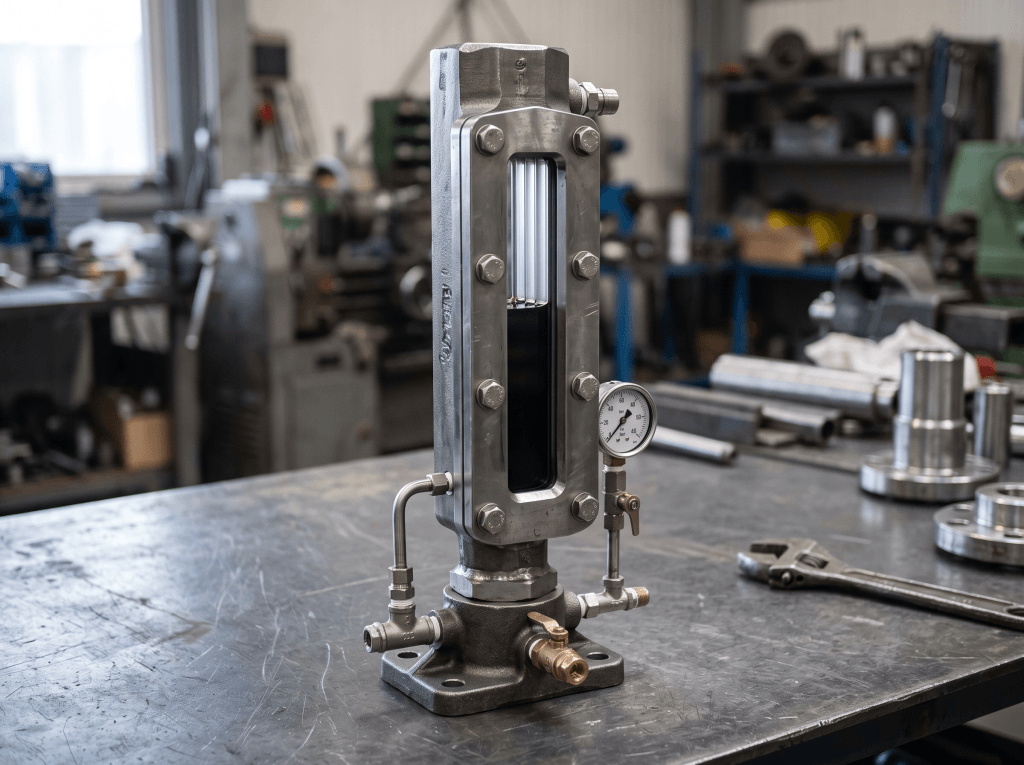
Reflex, plain and sight glass all show a liquid level, but they work differently and suit different situations — picking based on habit rather than the actual viewing conditions and application leads to a gauge that’s harder to read than it should be.
Reflex gauge glass: best readability in variable light
Reflex Gauge Glass uses a prismatic face that reflects light differently where there is vapour versus liquid, showing the level as a sharp silver-and-black band. This makes it far easier to read at a glance, including in poor lighting, which is why it’s the standard choice for boiler drum level.
Plain gauge glass: simple, direct viewing
Plain Gauge Glass is a transparent tubular glass that shows the level directly, without the reflex effect. It works well where the liquid itself has enough colour or clarity contrast against the background, and is a simpler, sometimes more economical option than reflex construction.
Sight glass: viewing flow and condition, not just level
Sight Glass is built for general process viewing — flow, colour, turbidity or condition — rather than specifically for precision level reading. It’s the right choice when what you need to see is what’s happening in the line or vessel, not just where the level sits.
A quick decision table
| What you need | Best choice |
|---|---|
| Clear level reading in variable/poor light (boilers) | Reflex Gauge Glass |
| Simple direct level view, well-lit area | Plain Gauge Glass |
| Viewing flow, colour or process condition | Sight Glass |
Frequently asked questions
Can reflex gauge glass be used for general process sight viewing too? It’s optimised for level reading specifically; for viewing flow or fluid condition, a standard sight glass is the more appropriate choice.
Is reflex glass more fragile than plain glass? Both are toughened borosilicate rated for the same pressure and temperature duty — the difference is the prismatic face geometry, not the glass strength.
Tell us what you need to see — level, flow, or general condition — and the lighting conditions, and we’ll confirm the right gauge type.