
October 13, 2026
Aluminium vs Silicone vs PTFE Coated Fibreglass Fabric
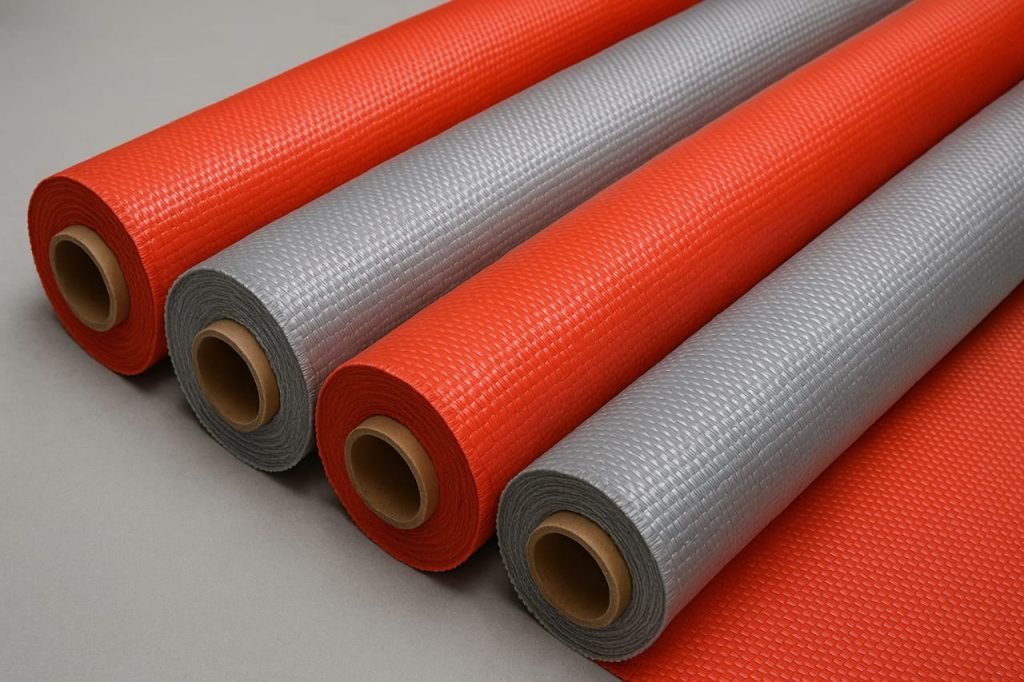
Fibreglass fabric is coated to do a job the bare cloth cannot. The coating decides almost everything about where the fabric can go — aluminium reflects radiant heat, silicone seals and flexes, PTFE resists chemicals and releases. Picking by price alone is how a fabric ends up failing in months.
Quick comparison
| Coating | What it adds | Typical use | Avoid where |
|---|---|---|---|
| Aluminium | Reflects radiant heat; adds a vapour barrier | Heat shields, personnel screens, pipe lagging jackets | Direct abrasion or flexing — the foil face scuffs |
| Silicone | Seals the weave, stays flexible, sheds sparks | Expansion joints, welding blankets, flexible ducting | Strong solvents and aggressive chemical attack |
| PTFE | Chemical inertness and a non-stick release surface | Release sheets, heat sealing, chemical splash duty | Where cost matters and chemistry is not the issue |
Aluminium coated
Aluminium coated fibreglass fabric works by reflection rather than insulation thickness. The metallised face turns radiant heat back, which is why it suits heat shields and screens protecting people or equipment standing near a hot source. It also acts as a vapour barrier when used as a lagging jacket. The coating is the weak point mechanically — it scuffs, so it is not the choice where the fabric will be dragged or repeatedly folded.
Silicone coated
Silicone coated fibreglass fabric is the flexible workhorse. The silicone seals the weave so the fabric becomes gas-tight enough for expansion joints and flexible ducting, and it stays pliable through repeated movement rather than going brittle. It sheds weld spatter, which is what makes it the standard welding blanket material. Its limit is chemical: silicone handles heat and flexing well, but strong solvents attack it.
PTFE coated
PTFE coated fibreglass fabric buys you chemistry and release. PTFE is close to chemically inert, so it survives splash and fume that would degrade silicone, and nothing sticks to it — which is why it is used as release sheeting and in heat-sealing work. It is the most expensive of the three. If your problem is radiant heat or flexing rather than chemical attack, you are paying for a property you do not need.
What decides it
- The hazard — radiant heat, spark and spatter, chemical attack, or sticking.
- Movement — a fabric that flexes in service rules out the aluminium face.
- Continuous temperature, not peak. See the heat resistance chart.
- Chemical exposure — check it against the chemical compatibility chart before specifying silicone.
Indicative guidance only. Coating weight, base cloth and temperature rating vary by grade; confirm against the datasheet for the fabric we quote before specifying from it.