
July 8, 2026
High-Temperature Sealing and Insulation for Glass Manufacturing Furnaces
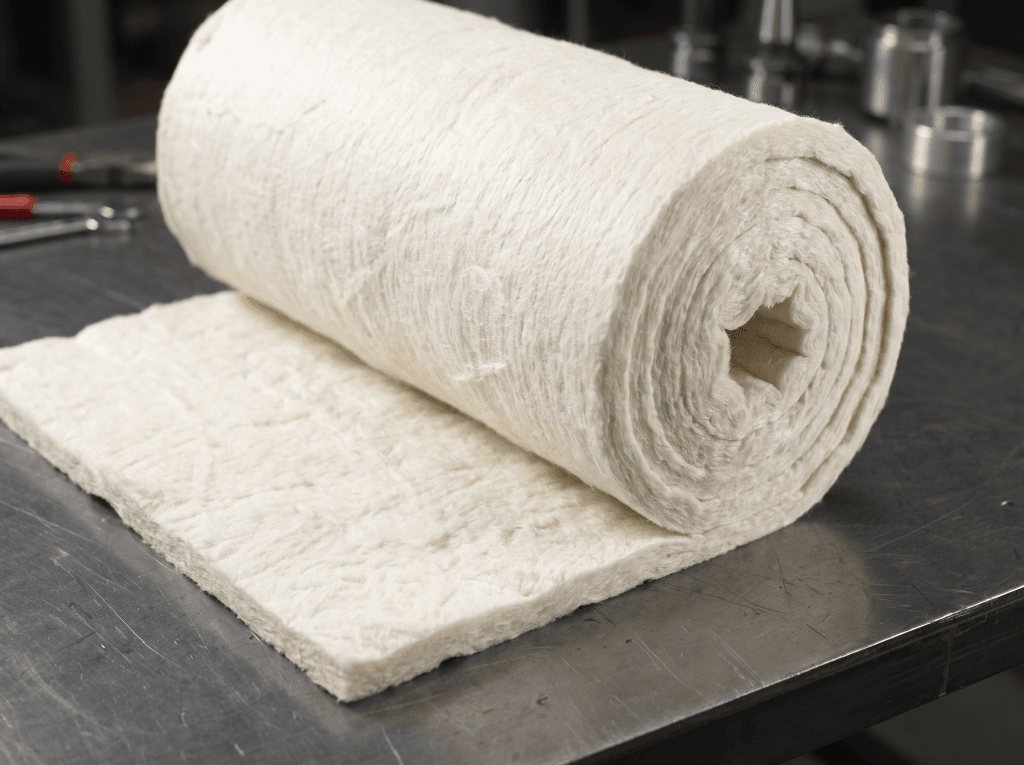
Glass furnaces run continuously between major rebuilds, often for years, at temperatures that push refractory insulation to its limits. Getting the lining and sealing specification right at the start matters more here than in almost any other industry, because the cost of a wrong choice compounds for the entire campaign.
Furnace crown and wall insulation
Ceramic Fiber Wool backs up refractory brickwork with low-heat-storage insulation classified to 1260°C, reducing shell temperature and fuel loss over the life of the campaign. Ceramic Board provides rigid insulation in zones needing more mechanical stability.
Expansion joints and access points
Ceramic Paper fills expansion joints and gaps between refractory sections, flexing with thermal movement without losing its insulating value.
Hot-end protection
Vermiculite Coated Silica Cloth shields workers and equipment from radiant heat at furnace openings and hot-end handling points, where standard fibreglass cloth would be inadequate.
Frequently asked questions
Why does furnace lining matter more in glass manufacturing than other industries? Because campaigns run for years without a full rebuild — the fuel cost of even a small insulation deficiency compounds enormously over that timeframe.
Can ceramic paper handle the same temperature as ceramic blanket? Yes, within the same classification range — the difference is form factor (thin, flexible sheet) rather than temperature capability.
Tell us your furnace zone temperatures and campaign length and we’ll confirm the right insulation combination.