
October 13, 2026
Storage and Shelf Life: Keeping Rubber, PTFE and Fibre Serviceable
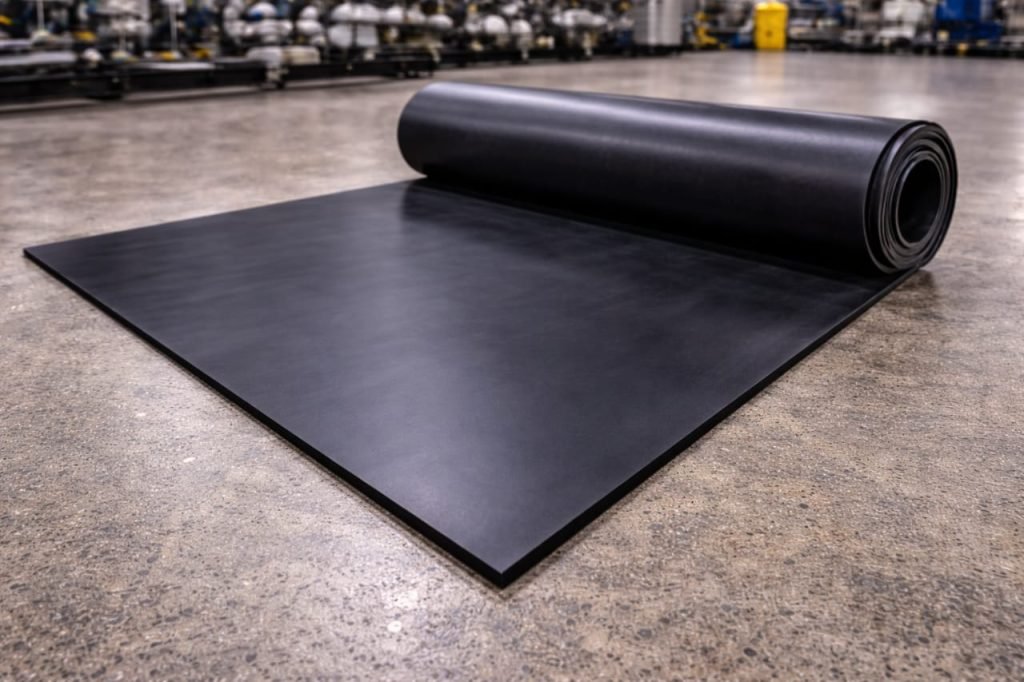
Sealing and insulation materials age on the shelf as well as in service. A gasket sheet stored badly for two years can fail on the day it is fitted, and the cause is almost never visible at the point of use. Storage is cheap; a shutdown caused by a perished seal is not.
What actually degrades materials in store
- Ozone and UV — the main enemy of rubber. Both attack the polymer surface and start cracks.
- Heat — accelerates every ageing process. Each rise in storage temperature shortens shelf life.
- Compression and folding — sets a permanent deformation that the material never fully recovers from.
- Moisture — collapses and contaminates fibre insulation, destroying its thermal value.
- Solvents and oils — swell or attack elastomers even in vapour form.
Rubber sheet and elastomer products
Rubber sheet is the most storage-sensitive material we supply. Keep it cool, dark and away from electrical equipment — motors and switchgear generate ozone, which cracks rubber faster than anything else in a store. Store flat or loosely rolled on a core, never folded, and never with heavy items stacked on it. Check older stock for surface crazing before issuing it.
PTFE and fluoropolymers
PTFE is chemically stable and effectively does not perish, so shelf life is not the concern. Deformation is. PTFE cold-flows under sustained load, so sheet stored under stacked weight takes a set that it will not recover. Store it flat and unloaded, and keep PTFE sheet clean — contamination on the surface compromises the seal and PTFE is hard to clean once embedded.
Jointing sheet and gasket material
Store flat, dry and out of sunlight. Humidity is the issue: fibre-reinforced sheet absorbs moisture, which affects both the thickness and the way it compresses under bolt load. Keep sheets in their wrapping until they are cut, and do not store them leaning against a wall where they will bow.
Fibre insulation
Ceramic fibre wool and glass wool fail in storage mainly through moisture and compression. Wet insulation loses most of its thermal value and may not fully recover on drying. Keep rolls off the floor on pallets, under cover, and still wrapped. Do not stack heavy material on blanket — crushed blanket has lost the trapped air that does the insulating.
Rotate stock and label it
Mark goods with the date received and issue oldest first. Most perished material found at point of use is not ancient — it is two-year-old stock sitting behind six-month-old stock because nobody rotated the rack.
A practical store
Cool, dry, dark, off the floor, away from motors and switchgear, out of direct sun, nothing heavy stacked on sheet goods, and stock dated. That covers almost everything in this catalogue. If material has been stored badly and you are unsure whether it is still serviceable, send us a photograph of the surface before you fit it — surface crazing on rubber and crushed or damp blanket are usually visible.