
July 7, 2026
Preventing Steam Leakage in Power Plants: A Practical Guide to Gland Packing & Gasket Selection
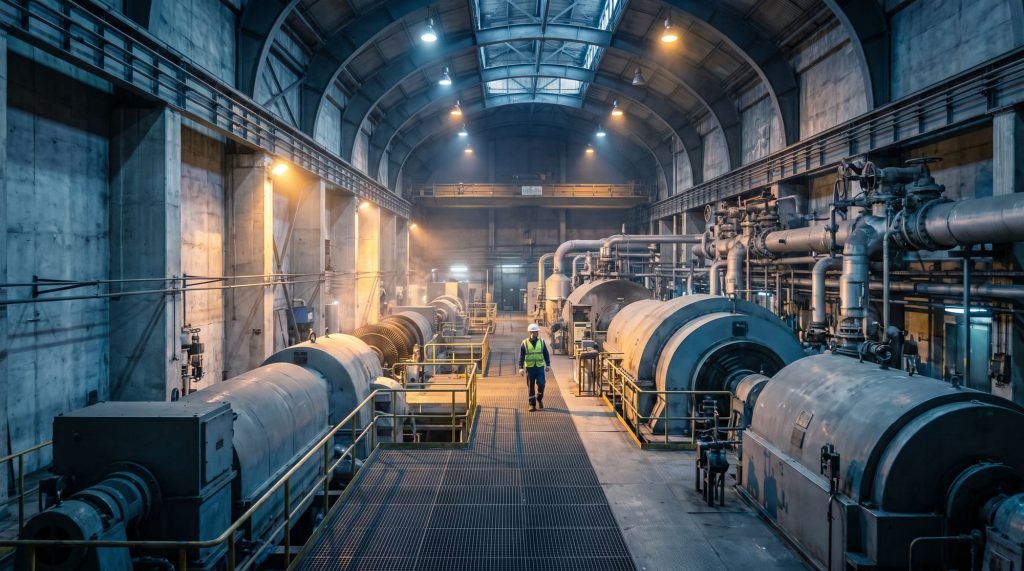
Steam leakage is one of the most common — and most expensive — reliability problems in a power plant. A single leaking valve gland can waste thousands of litres of treated feedwater a year, force early trips for re-packing, and in the worst cases become a safety hazard around high-pressure steam lines. Most of these leaks trace back to one root cause: the wrong sealing material for the actual operating conditions.
Why steam valves and pumps leak in the first place
Steam service is unforgiving on packing and gaskets for three reasons: sustained high temperature, pressure cycling as the plant ramps up and down, and the fact that steam itself is an excellent solvent for anything that isn’t truly chemically stable. Packing that works fine on a cold-water pump will harden, extrude, or char within weeks on a boiler feed line rated above 300°C.
The most frequent mistake we see is a plant standardising on one packing grade for every application to simplify stores — then wondering why the high-pressure valves need re-packing every few months while the low-pressure ones are fine.
Matching packing grade to the actual temperature and pressure
For steam and boiler-feed duty, graphite-based packings are the industry default, but “graphite” is not one product — the temperature rating changes significantly with construction:
- Graphite Gland Packing — flexible expanded-graphite yarn, rated to 450°C on rotating pumps and up to roughly 650°C on valves. This is the right default for most boiler feed pumps and steam valves.
- Graphite Packing with Inconel Wire — the same graphite base reinforced with Inconel wire, so it resists extrusion and blow-out on high-pressure superheated steam and boiler valves where plain graphite would squeeze out under load.
- Asbestos Graphite Packing — a traditional, economical option for hot-water and moderate steam duty around 450°C, with a non-asbestos equivalent available where required.
If a valve is failing repeatedly and it isn’t on a high-pressure line, the packing is very often correct for temperature but wrong for mechanical duty — check whether the shaft speed or gland adjustment, not the material, is the actual problem before upgrading to a more expensive grade.
Flange and cover gaskets: the leak point everyone forgets
Packing gets the attention because it needs periodic maintenance, but flange gaskets are just as often the source of a “steam leak” a plant is chasing. For steam and hot-water flanges, Non-Asbestos Jointing Sheet handles standard steam and hot-oil duty up to around 200–210°C and 20 bar, while Asbestos Jointing Sheet extends that to roughly 450–500°C for the highest-temperature lines. Getting this choice wrong is the single most common cause of a “new gasket that still leaks” complaint — the sheet was rated for the wrong side of the pressure-temperature chart.
Watching the process: gauges that actually tell you something is wrong before it fails
Reliable gland packing only helps if the plant can see when conditions are drifting. Reflex Gauge Glass and Plain Gauge Glass give operators a direct, high-pressure-rated view of boiler drum water level, while Wika Pressure Gauges and Temperature Gauges catch the pressure or temperature excursions that precede most seal failures — often weeks before a packing actually fails.
Insulation: the other half of a steam-leak reduction programme
Heat loss through poorly lagged valves and pipework isn’t a leak in the strict sense, but it costs a plant fuel every hour of every day it runs. Ceramic Fiber Wool and Ceramic Board handle boiler and duct lining up to 1260°C, while Glass Wool covers general pipe and duct insulation on cooler lines. A proper lagging survey alongside a packing review is usually the fastest payback maintenance project available in a power plant.
A quick reference for common power-plant sealing decisions
| Application | Recommended product | Why |
|---|---|---|
| Boiler feed pump, standard duty | Graphite Gland Packing | 450°C rating covers almost all feed-pump conditions |
| High-pressure superheated steam valve | Graphite Packing with Inconel Wire | Wire reinforcement stops extrusion under pressure |
| Standard steam/hot-oil flange | Non-Asbestos Jointing Sheet | Rated to ~210°C / 20 bar, asbestos-free |
| Highest-temperature steam flange | Asbestos Jointing Sheet | Handles up to ~500°C where non-asbestos grades fall short |
| Boiler drum level | Reflex Gauge Glass | Readable at a glance, rated for high-pressure steam |
Frequently asked questions
How often should steam valve packing be replaced? There’s no fixed interval — it depends on cycling frequency and temperature — but if a valve needs re-packing more than once a year, the grade is very likely wrong for the duty, not just worn out.
Can the same packing be used for both feed pumps and steam valves? Often yes at the material level (graphite), but valve service usually benefits from the wire-reinforced grade because of the higher, more static pressure load compared to a rotating pump shaft.
Is non-asbestos jointing as reliable as asbestos jointing for steam? For standard steam and hot-oil duty, yes — it’s the modern default. Only the very highest temperature and pressure lines still call for an asbestos-based sheet.
If you’re re-packing the same valves every shutdown, send us the line’s pressure and temperature and we’ll confirm you’re on the right grade before you buy another batch of the same packing.