
July 7, 2026
Gasket and Packing Selection for Oil & Gas Piping: Preventing Leaks Under Pressure and Temperature
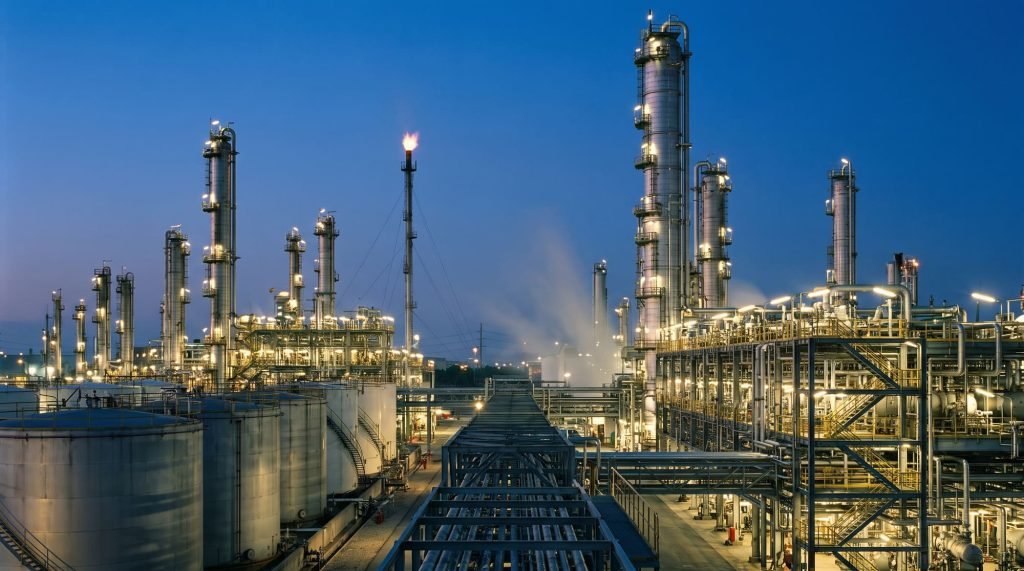
Oil and gas installations combine high pressure, elevated temperature and hydrocarbon exposure in a single line more often than almost any other industry — which means a sealing choice that’s “close enough” on one axis often fails on another. Getting gasket and packing selection right the first time matters more here than almost anywhere else, because access for repair is frequently difficult and unplanned downtime is expensive.
High-pressure valve packing
Wellhead, pipeline and process valves in oil and gas service routinely combine high pressure with elevated temperature, conditions that push ordinary packing toward extrusion and blow-out. Graphite Gland Packing is the standard base material, rated to 450°C on rotating equipment and up to roughly 650°C on valves, with near-universal chemical resistance across the full pH range. Where pressure is high enough that plain graphite risks extruding under load, Graphite Packing with Inconel Wire adds Inconel wire reinforcement specifically to resist that failure mode.
Flange gaskets across pipeline and process piping
Non-Asbestos Jointing Sheet and Asbestos Jointing Sheet cover the range from standard to the highest-temperature flange joints found across a facility, chosen by the actual pressure-temperature rating of each line rather than a single blanket spec for the whole site. On irregular flanges, manways or where a conformable seal solves problems a rigid gasket can’t, PTFE Joint Sealant forms an in-place gasket that seals surfaces a cut sheet would struggle with.
Monitoring pressure before it becomes a failure
Wika Pressure Gauges provide the accurate, durable pressure indication that oil and gas process monitoring depends on — glycerine-filled models specifically address the vibration common on compressor and pump-adjacent lines, where a dry gauge would wear out its movement prematurely and start reading incorrectly well before it visibly fails.
Insulation and heat protection around hot lines and welding areas
Pipework carrying hot process fluid needs lagging that survives outdoor conditions and vibration as well as heat. Ceramic Fiber Tape wraps hot pipe joints and connections at temperatures up to around 1050°C, while Vermiculite Coated Silica Cloth protects welding and hot-work areas from spark and splash during maintenance on live facilities — a real safety consideration when hot work happens near process piping that can’t always be fully isolated.
A pressure-temperature reference for common decisions
| Line condition | Recommended product |
|---|---|
| Standard valve, moderate pressure/temp | Graphite Gland Packing |
| High-pressure valve, extrusion risk | Graphite Packing with Inconel Wire |
| Standard pipeline flange | Non-Asbestos Jointing Sheet |
| Highest-temperature flange | Asbestos Jointing Sheet |
| Irregular flange or manway | PTFE Joint Sealant |
| Vibrating pump/compressor line | Wika Pressure Gauges (glycerine-filled) |
Frequently asked questions
Why does our pressure gauge read inaccurately after a few months on a compressor line? Vibration wears a dry gauge movement over time; a glycerine-filled gauge is specifically designed to damp that vibration and hold accuracy far longer.
Is Inconel-reinforced packing necessary on every valve, or just the highest-pressure ones? Just the highest-pressure and highest-risk-of-extrusion valves — standard graphite packing is more cost-effective everywhere else.
Can PTFE joint sealant replace cut gaskets across the whole facility? It’s usually reserved for irregular, glass-lined or hard-to-gasket joints; standard flat flanges are typically better served by a conventional cut sheet on cost grounds.
Send us the pressure and temperature rating for the line you’re specifying and we’ll confirm the correct packing or gasket grade before you order.