
Industry Solutions
Engineering WorkshopsMachining Stock, Specified Correctly
PTFE, and the engineering plastics around it, are chosen for very different reasons — friction, chemistry, load, dimensional stability. We supply the stock and we will tell you honestly when a cheaper material is the better engineering answer.
Industry Overview
Operating conditions & why material choice matters
Workshops machining bushes, bearings, seals, spacers and wear components need stock that behaves predictably under the tool and in service. The recurring problem is not availability — it is material selection, because PTFE, nylon and acetal all get specified for similar-looking jobs and each wins on a completely different property.
PTFE wins decisively on temperature range (−180 °C to +260 °C), chemical inertness (pH 0–14) and friction — it has the lowest coefficient of friction of any solid. It also absorbs effectively no moisture, so machined tolerances hold in wet and humid environments where nylon would swell and bind.
What PTFE is not is strong. It is soft and it creeps under sustained load, so for heavily loaded precision parts a harder engineering plastic is genuinely the better choice — and usually cheaper. We would rather tell you that than sell you PTFE for a job it will underperform in.
Common Engineering Challenges
What actually fails — and why
Each challenge links to the full technical article in our Resource Center.
Choosing the Wrong Engineering Plastic
PTFE, nylon and acetal each win on a different property. Specifying by habit rather than by duty is a common, costly mistake.
Read the guideBushes Seizing on Thermal Expansion
PTFE has a high thermal expansion coefficient. A bush cut to a tight fit at ambient can seize when the assembly heats up.
Read the guideCreep & Cold Flow Under Load
Unfilled PTFE creeps under sustained load. For loaded wear duty a filled grade or a harder plastic is the right answer.
Read the guideNylon Swelling in Humid Service
Nylon absorbs moisture and changes dimension. PTFE absorbs effectively none — which is why tolerances hold in wet environments.
Read the guideSolutions We Provide
Problem → material, with the reasoning
Every recommendation below links to the full technical page for that product.
Low-friction bushes, bearings & slides
PTFE Rods
Machining stock with the lowest coefficient of friction of any solid (0.05–0.10) — it runs dry, with no lubrication and no stick-slip.
Chemically-exposed machined components
PTFE Rods
Inert across pH 0–14, so machined parts survive in acids, caustics and solvents that would destroy metal or other plastics.
Flat machined parts, wear plates & liners
PTFE Sheets
Thicker moulded sheet is machining stock for flat components, seals and wear plates where the part is not turned from rod.
Cryogenic to high-temperature parts
PTFE Rods
−180°C to +260°C continuous — a range no other common machinable plastic comes close to.
Electrical insulators & standoffs
PTFE Rods
Volume resistivity above 10¹⁸ Ω·cm and a frequency-stable dielectric constant of 2.1 — an outstanding machinable dielectric.
Gaskets cut from sheet stock
Non Asbestos Jointing Sheet
For general workshop gasket cutting — steam, water, oil and air — where PTFE would be unnecessary and far more expensive.
Engineering Case Studies
Real problems, real investigation, real outcomes
Each case is titled by the engineering problem it solved — not by the customer’s name.
Customer Problem
Maverick Solutions in Gujrat required low-friction custom bushes for industrial machinery, to be machined in-house. The bushes needed to run without lubrication, which immediately narrows the material choice.
Technical Investigation
The application called for dimensional stability and chemical resistance alongside low friction. Those three requirements together point clearly at PTFE: it has the lowest coefficient of friction of any solid, it is inert across the full pH range, and it absorbs effectively no moisture — so machined tolerances hold in humid or wet service where a nylon bush would swell and bind.
Root Cause
This was a specification enquiry rather than a failure. The customer had a clear engineering requirement — a dry-running, chemically-exposed, dimensionally-stable bush — and needed machining stock that would actually deliver it.
Recommended Solution
We supplied PTFE rod in the required diameters for machining. PTFE was the correct answer here specifically because the bush had to run dry: a PTFE bush needs no oil or grease, which is exactly what you want in a sealed assembly that cannot be re-lubricated, or anywhere lubricant contamination is unacceptable.
Installation Summary
The customer machined the components themselves. The guidance that matters most when machining PTFE bushes is thermal expansion: PTFE expands roughly ten times as much as steel, so a bush cut to a tight running clearance at room temperature can close up and seize once the assembly heats up. The bore should be machined to the clearance required at the operating temperature, not at ambient. Where the bush carries sustained load, PTFE also cold-flows, so a metal backing sleeve or a shouldered housing stops it creeping out of position.
Operational Result
The customer successfully machined the required components from the supplied rod.
Products Used
Related Resource Guides
Recommended Products
Specified for Engineering Workshops
 PTFE Products
PTFE Rods
Virgin and reprocessed PTFE rod from 1/8 inch to 8 inches in diameter —…
PTFE Products
PTFE Rods
Virgin and reprocessed PTFE rod from 1/8 inch to 8 inches in diameter —…
 PTFE Products
PTFE Sheets
PTFE sheet has excellent resistance to the majority of chemicals and solvents and is…
PTFE Products
PTFE Sheets
PTFE sheet has excellent resistance to the majority of chemicals and solvents and is…
 Jointing Sheets
Non Asbestos Jointing Sheet
Non asbestos jointing sheets are made of special non-asbestos heat resisting fiber ,Heat-resisting packing…
Jointing Sheets
Non Asbestos Jointing Sheet
Non asbestos jointing sheets are made of special non-asbestos heat resisting fiber ,Heat-resisting packing…
 Rubber Products
Rubber Sheet
Rubber sheet is supplied in several grades that look identical but behave completely differently:…
Rubber Products
Rubber Sheet
Rubber sheet is supplied in several grades that look identical but behave completely differently:…
 Rubber Products
Silicone Rubber Sheet
Silicone rubber sheets are special type of rubber sheets which have the capacity to…
Rubber Products
Silicone Rubber Sheet
Silicone rubber sheets are special type of rubber sheets which have the capacity to…
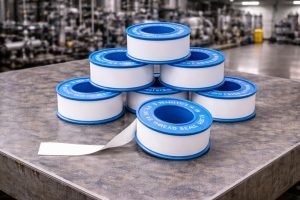 PTFE Products
PTFE Thread Seal Tape
Thread seal tape is a PTFE film tape commonly used in plumbing for sealing…
PTFE Products
PTFE Thread Seal Tape
Thread seal tape is a PTFE film tape commonly used in plumbing for sealing…
 Industrial Felts
Wool Felt
Wool felt is used in a wide range of industries and manufacturing processeses from…
Industrial Felts
Wool Felt
Wool felt is used in a wide range of industries and manufacturing processeses from…
 Rubber Products
Rubber Pad
Rubber pads absorb vibration and shock under machinery, compressors, pumps, generators and HVAC plant,…
Rubber Products
Rubber Pad
Rubber pads absorb vibration and shock under machinery, compressors, pumps, generators and HVAC plant,…
Engineering Resources
Work it out before you pick up the phone
Calculators, reference charts and technical guides for Engineering Workshops.
Technical Articles & Installation Guides
Industry FAQ
Questions Engineering Workshops engineers actually ask
PTFE, nylon or acetal — which should I machine from?
Choose on the dominant requirement. Temperature, chemistry or friction → PTFE. Mechanical strength, stiffness, precision gears → acetal (POM/Delrin), which is stronger and usually cheaper. Nylon sits between them but absorbs moisture and changes dimension. Do not default to PTFE because it is the premium material — it is soft.
Why did my PTFE bush seize when the machine heated up?
Thermal expansion. PTFE expands roughly ten times as much as steel. A bush machined to a tight running clearance at ambient will close up and seize once the assembly reaches operating temperature. Machine the bore to the clearance required at the operating temperature, not at ambient.
Is PTFE good for heavily loaded wear parts?
Unfilled PTFE is not — it is soft and it creeps (cold-flows) under sustained load. For loaded wear duty, use a filled PTFE grade (glass, carbon or bronze), which trades a little friction for a large gain in load capacity and dimensional stability, or choose a harder plastic.
What diameters of PTFE rod do you supply?
From about 5 mm up to 100 mm and larger, with bigger sizes available as moulded billet to order. Tell us the diameter and length you need.
How is PTFE priced?
By weight. Diameter and length determine the weight, so those two figures drive the price. Our PTFE Weight Calculator will give you the weight of any size.
Virgin or reprocessed PTFE?
Virgin for chemical, food and critical duty, with full properties and certification. Reprocessed uses recycled PTFE, costs less, and is fine for less demanding applications. Tell us the duty and we will advise.
Why Al-Hamd Traders
For Engineering Workshops, specifically
We will tell you when PTFE is wrong
If acetal will do the job better and cheaper, we will say so rather than selling you the premium material.
Machining-aware advice
Thermal expansion, creep, clearance at temperature — the things that actually cause a machined part to fail in service.
Stock in the sizes you machine
Rod from 5 mm to 100 mm+, sheet from 0.5 mm to 50 mm, plus billet to order.
Priced by weight, transparently
PTFE is sold by weight — work out your own figure with our calculator before you call.
Tell us the problem. We’ll confirm the material.
Send us your operating conditions — temperature, pressure, media — or a drawing, and we will tell you what actually works. Including when the cheaper option is the better one.