
Industry Solutions
Oil & GasSealing, Insulation & Removable Valve Jackets
Hot valves and flanges radiate energy continuously, and hydrocarbon service destroys the wrong seal quickly. We supply the high-temperature sealing and the custom removable insulation jackets that fix both — including for OGDCL.
Industry Overview
Operating conditions & why material choice matters
Oil and gas service combines aggressive media, wide temperature swings and high pressure — a combination that eliminates most sealing materials outright. Graphite handles the heat and hydrocarbons; PTFE handles the chemistry; and each has a specific limit that matters. Graphite is attacked by strong oxidizers, and PTFE creeps under sustained bolt load. Knowing where each one stops is most of the job.
The problem that gets overlooked, though, is heat loss from valves and fittings. Pipe runs get lagged as a matter of course, but valves, flanges and instrument fittings are routinely left bare — because they need periodic access, and conventional lagging has to be destroyed to get at them. So they stay uninsulated, and every one of them radiates energy continuously, 24 hours a day, for the life of the plant. A single bare gate valve on a hot line is a surprisingly large, entirely avoidable loss.
The answer is a removable insulation jacket: a tailored, multi-layer, sewn cover that straps around the valve, insulates it properly, and can be unstrapped in minutes for maintenance and then refitted. We designed and supplied exactly this for OGDCL Dakhni — the case study is below, including the full layer construction and why each material was chosen.
Common Engineering Challenges
What actually fails — and why
Each challenge links to the full technical article in our Resource Center.
Heat Loss from Bare Valves & Flanges
Pipes get lagged; valves get left bare because they need access. Each one then radiates energy continuously for the life of the plant.
Read the guideWrong Packing on Hydrocarbon Service
Hot hydrocarbons and high-pressure valve stems destroy packing that is not rated for the duty. Extrusion and blow-out follow.
Read the guideStrong Oxidizers Destroying Graphite
Nitric and chromic acid chemically attack graphite packing. This is a material incompatibility, not a rating you can push.
Read the guideCorrosion in Salt & Weather Exposure
Seawater, salt spray and weathering degrade the wrong elastomer within a season. EPDM and NBR each fail against the other’s enemy.
Read the guideSolutions We Provide
Problem → material, with the reasoning
Every recommendation below links to the full technical page for that product.
Heat loss from hot valves & flanges
Ceramic Fiber Wool
The insulating core of a removable jacket. High-density ceramic fibre wool is what actually stops the heat — it holds its insulating value at valve-body temperatures where glass wool would fail. See the OGDCL case study below.
Jacket outer skin — weather & abrasion
Silicone Coated Fiberglass Fabric
The outer face of the jacket. Silicone-coated fibreglass resists weather, oil, abrasion and UV, so the jacket survives repeated removal and refitting outdoors.
Jacket vapour/oil barrier layer
PTFE Sheets
The middle layer. PTFE is chemically inert and effectively non-absorbent, so oil and moisture cannot soak into the insulation core and destroy its performance.
Superheated steam & HP valve stems
Graphite Packing With Inconel Wire
Steam to ~650°C and valve pressures to ~550 bar. The Inconel wire stops soft graphite extruding out of the gland. Not for oxidizer service.
Aggressive chemistry & oxidizers
Pure PTFE Gland Packing
Inert across pH 0–14. The correct choice where graphite would be chemically attacked — nitric acid, chromic acid and similar oxidizers.
Flange gaskets on hydrocarbon lines
PTFE Sheets
Resists hydrocarbons, sour gas and drilling chemicals. Design for creep — star-pattern torque and a re-torque after the first heat cycle.
Engineering Case Studies
Real problems, real investigation, real outcomes
Each case is titled by the engineering problem it solved — not by the customer’s name.
Customer Problem
OGDCL’s Dakhni plant was losing significant energy through its high-temperature process lines. The mild steel (MS) pipework itself was insulated, but the gate valves in those lines were not. Whenever high-temperature media was fed through the system, the valve bodies heated up and radiated that heat straight into the atmosphere — continuously, on every valve, for as long as the plant was running. The plant knew it was losing energy but had no practical way to insulate the valves, because any fixed lagging would have to be destroyed every time a valve needed inspection, operation or maintenance.
Technical Investigation
We worked directly with OGDCL’s equipment engineers rather than quoting from a distance. Together we walked the affected lines and confirmed the pattern: the pipe runs were lagged, but every valve was a bare, hot, exposed mass of steel sitting in the middle of an otherwise insulated line. Each one was effectively acting as a radiator. We also established the practical constraint that had caused the problem in the first place — these valves needed to stay accessible, so whatever we proposed had to be removable and refittable by plant staff, not a permanent enclosure.
Root Cause
The valves were not insulated because conventional lagging cannot be removed. This is the same reason valves go uninsulated in plants everywhere: the maintenance requirement and the insulation requirement appear to be in direct conflict, so insulation loses and the heat loss is quietly accepted as unavoidable. It is not unavoidable — it just needs a different kind of insulation.
Recommended Solution
We designed a custom removable insulation jacket for the valves — tailored to their dimensions, strapped rather than fixed, and built as a three-layer laminate, with each layer doing a specific job:
Inner layer — high-density Ceramic Fiber Wool. This is the layer that actually stops the heat. High density was specified deliberately: it holds its insulating performance at valve-body temperatures, where a lower-density or lower-grade material would compress, degrade and lose value.
Middle layer — PTFE Sheet. A barrier layer. PTFE is chemically inert and effectively non-absorbent, so oil, hydrocarbons and moisture from the plant environment cannot soak through into the ceramic fibre core. This matters more than it sounds: insulation that has absorbed oil or water stops insulating, and in a live oil and gas plant that contamination is a question of when, not if.
Outer layer — Silicone Coated Fiberglass Fabric. The skin. It has to survive weather, UV, oil splash, abrasion and being handled and re-strapped repeatedly by maintenance crews. Silicone-coated fibreglass takes all of that without cracking or perishing.
Installation Summary
The three layers were cut to the profile of each valve and sewn with heat-resistant aramid (Kevlar-type) thread. This detail is not cosmetic and it is the one most often got wrong: an insulation jacket is only as good as its seams, and ordinary polyester or cotton thread will degrade and burn through at valve-body temperatures — at which point the jacket comes apart precisely at the points holding it together. Aramid thread is what makes the assembly survive in service. The finished jackets were fitted to the valves with straps, so plant staff can remove a jacket in minutes for inspection or operation and refit it afterwards without damaging it or calling in a contractor.
Operational Result
With the jackets fitted, OGDCL reported a reduction of approximately 90% in the heat being lost at the jacketed valves — the customer’s own figure from their installation. That magnitude is consistent with what valve insulation does in principle: a bare hot valve is an efficient radiator, and enclosing it properly removes almost all of that loss. Just as importantly, the solution held up operationally, because it did not force the plant to choose between insulation and maintenance access — the jackets come off and go back on. Your own saving will depend on valve size, surface temperature and how many valves are currently bare; our Heat Loss Calculator will give you an estimate for your line.
Products Used
Recommended Products
Specified for Oil & Gas
 Insulation Products
Ceramic Fiber Wool
Ceramic wool is perfect for situations with direct exposure to flames.With regards to manufacturing…
Insulation Products
Ceramic Fiber Wool
Ceramic wool is perfect for situations with direct exposure to flames.With regards to manufacturing…
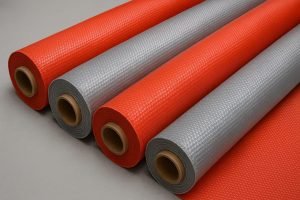 Heat Proof Cloth
Silicone Coated Fiberglass Fabric
Silicone coated fiberglass fabric has quite similar characteristics to those of PTFE coated fiberglass…
Heat Proof Cloth
Silicone Coated Fiberglass Fabric
Silicone coated fiberglass fabric has quite similar characteristics to those of PTFE coated fiberglass…
 PTFE Products
PTFE Sheets
PTFE sheet has excellent resistance to the majority of chemicals and solvents and is…
PTFE Products
PTFE Sheets
PTFE sheet has excellent resistance to the majority of chemicals and solvents and is…
 Gland Packings
Graphite Packing With Inconel Wire
Graphite packing with inconel wire is a specialized type of gland packing which can…
Gland Packings
Graphite Packing With Inconel Wire
Graphite packing with inconel wire is a specialized type of gland packing which can…
 Gland Packings
Pure PTFE Gland Packing
Pure PTFE packing is made up of 100% pure PTFE fiber and has a…
Gland Packings
Pure PTFE Gland Packing
Pure PTFE packing is made up of 100% pure PTFE fiber and has a…
 Gland Packings
Graphite Gland Packing
Product Description This type of gland packing is made from graphite-PTFE compound with lubricant…
Gland Packings
Graphite Gland Packing
Product Description This type of gland packing is made from graphite-PTFE compound with lubricant…
 Jointing Sheets
Non Asbestos Jointing Sheet
Non asbestos jointing sheets are made of special non-asbestos heat resisting fiber ,Heat-resisting packing…
Jointing Sheets
Non Asbestos Jointing Sheet
Non asbestos jointing sheets are made of special non-asbestos heat resisting fiber ,Heat-resisting packing…
 Gauge Glass
Reflex Gauge Glass
Reflex level gauges allow the medium to be viewed through a reflex glass.The side…
Gauge Glass
Reflex Gauge Glass
Reflex level gauges allow the medium to be viewed through a reflex glass.The side…
Engineering Resources
Work it out before you pick up the phone
Calculators, reference charts and technical guides for Oil & Gas.
Technical Articles & Installation Guides
Industry FAQ
Questions Oil & Gas engineers actually ask
Why are valves usually left uninsulated?
Because they need periodic access, and conventional lagging has to be cut away and rebuilt to reach them. So in practice they get skipped — and then radiate heat continuously for the life of the plant. A removable jacket solves the access problem, which is why it gets fitted where fixed lagging does not.
What is a removable insulation jacket?
A tailored, sewn, multi-layer cover that straps around a valve, flange or fitting. It insulates like fixed lagging but unstraps in minutes for maintenance and refits afterwards. We design and supply them to the dimensions of your specific valves — see the OGDCL Dakhni case study on this page.
What is a valve jacket made from?
Typically three layers plus thread. A high-temperature insulating core (high-density ceramic fibre wool), a barrier layer to keep oil and moisture out of the core (PTFE sheet), and a tough outer skin that survives weather, oil and handling (silicone-coated fibreglass) — all sewn with heat-resistant aramid (Kevlar-type) thread, because ordinary thread would simply burn through at the seams.
Why does the sewing thread matter?
Because a jacket is only as good as its seams. Ordinary polyester or cotton thread degrades and burns through at valve-body temperatures, and the jacket then falls apart at exactly the points holding it together. Heat-resistant aramid thread is what makes the assembly survive in service.
How much heat can a jacket actually save?
A bare hot valve radiates a great deal, so the reduction is large. On the OGDCL Dakhni installation, the customer reported roughly a 90% reduction in the heat being lost at the jacketed valves. Your own figure depends on valve size, surface temperature and how many valves are currently bare — our Heat Loss Calculator will give you an estimate.
Which packing do I need for high-pressure hot valve stems?
Graphite reinforced with Inconel wire — steam to around 650°C and valve pressures to roughly 550 bar. The one exception is strong oxidizers (nitric, chromic acid), which attack graphite chemically. For those, use Pure PTFE packing instead.
Why Al-Hamd Traders
For Oil & Gas, specifically
We have done this for OGDCL
We designed and supplied the removable valve jackets for OGDCL Dakhni, working directly with their equipment engineers. The full case study is on this page.
We engineer the jacket, not just sell cloth
Layer construction, material selection and the aramid thread that holds the seams together — specified for your valve temperatures, not from a catalogue.
We name the material limits
Graphite fails against oxidizers. PTFE creeps. We tell you where each material stops rather than selling past it.
Made to your valve dimensions
Jackets are tailored to the specific valves on your line, and strap on and off for maintenance access.
Tell us the problem. We’ll confirm the material.
Send us your operating conditions — temperature, pressure, media — or a drawing, and we will tell you what actually works. Including when the cheaper option is the better one.